How Maintenance Extends a Commercial Roof’s Life
A commercial roof rarely fails all at once. More often, it declines in small, quiet ways. A bit of moisture gets where it should not. A flashing detail starts to loosen up. Water finds a path at a penetration. None of that looks dramatic at first, which is exactly why maintenance matters so much.
Owners and facility managers sometimes think about roofs in two categories only: fine, or time to replace. In practice, there is a long middle stretch where a roof can keep doing its job if someone pays attention to what it is trying to say. That is where regular maintenance earns its keep. It helps spot weakness, deterioration, hazards, and repair needs before they turn into a larger leak event or a more expensive failure.
That simple shift, from reacting late to checking early, is what extends roof life.
Roof life is usually won or lost at the details
People tend to look at the field of the roof first because it is the biggest visible surface. The real trouble spots are often the transitions and interruptions. Flashing, penetrations, and other vulnerable details are where a lot of problems begin or become visible. When those areas fail, water does not always announce itself right away. It can move, spread, and show up somewhere far from the original entry point.
That is one reason leaks get misread. A ceiling stain inside the building can tempt someone to patch the obvious spot and move on. But a leak should be investigated thoroughly by qualified roofing professionals or consultants so the actual source of water entry can be identified. That kind of investigation is not just about stopping one drip. It is about understanding whether the issue is isolated or part of a broader pattern of deterioration.
I have seen plenty of building owners breathe a sigh of relief after a quick fix, only to deal with the same problem again because the original source was never really found. Water is patient. It follows the easiest path, and commercial roofs offer plenty of them when maintenance slips.
Age matters, but age alone does not decide the roof’s fate
One of the most useful habits in roof management is avoiding one-size-fits-all thinking. A roof’s age matters, but it should not be judged on age alone. Condition matters too, and condition has to be observed. Guidance on roof care consistently points to both age and visual inspection as part of the decision-making process. A roof may be older yet still serviceable with good upkeep, or it may be younger and already in trouble because warning signs were missed.
That is why annual inspection is such a sensible baseline. A yearly review creates a rhythm. It gives owners a chance to catch deterioration or damage while the repair area is still localized. It also creates a clearer record of change over time. A single inspection tells you what the roof looks like today. Repeated inspections tell you whether a seam, surface area, or roof detail is stable, drifting, or failing.
Without that rhythm, decisions become more emotional than practical. Someone sees one leak during a storm and assumes the whole roof must be done. Or, just as often, someone sees no leaks inside and assumes everything is fine. Neither assumption is very safe.
What maintenance actually does
The value of maintenance is not abstract. It is practical and direct. Its purpose is to identify problems early enough that they remain manageable. On commercial and industrial roofs, inspections and maintenance are meant to find weakness, deterioration, hazards, and needed repairs before those issues worsen. That early intervention can extend roof life because it addresses moisture issues, failed flashing, and localized trouble before they trigger bigger structural or leak-related failures.
That point deserves a little emphasis. Maintenance does not make a roof immortal. It does not turn a deteriorated roof into a new one. What it does is slow avoidable decline. It gives a roof the best chance to reach the far end of its useful service life without being pushed into early replacement by neglect.
A roof often does not need heroic intervention. It needs timely attention. There is a big difference.
The cost of waiting is rarely limited to the roof
When a commercial roof goes unchecked, the damage can spread beyond the membrane or covering itself. Moisture is the classic example. If water gets in and stays in, the problem expands. At that point, you are no longer talking only about the original opening. You are dealing with what that opening allowed to happen.
This is where maintenance changes the math. Catching moisture issues early is cheaper and simpler than dealing with a broad leak pattern later. Catching failed flashing early is easier than tracing water after it has moved through assemblies and into occupied space. A small area of deterioration is much easier to address than a larger section whose condition has been compromised by repeated exposure.
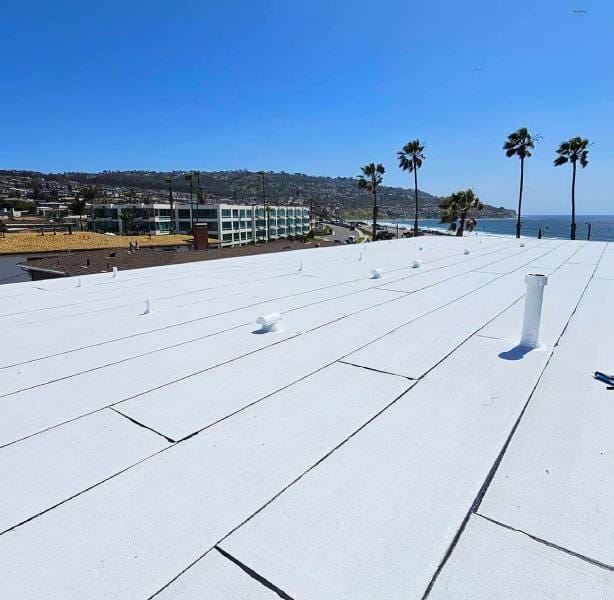
Even from an operations standpoint, delay creates headaches. A leak inside a commercial building can interrupt tenants, staff, storage, equipment use, and customer areas. A roof that is not weatherproof is not just a roofing issue. It becomes a building maintenance problem, and in some inspection frameworks, clear evidence of leaking is treated exactly that way.
The signs that should not be brushed off
Minor repair needs are one thing. Clear deterioration is another. A commercial roof should be considered for replacement when it shows obvious damage or deterioration rather than routine, isolated repair needs. Persistent leaks are a major warning sign. So is visible surface deterioration. Failures at flashing and penetrations also deserve serious attention, because they often point to weakness at the roof’s most vulnerable points.
That distinction is important because some owners swing too far in one direction. They either ignore clear distress and keep patching a roof that is telling them it is spent, or they assume every repair means replacement is right around the corner. Good maintenance helps separate those two cases.
Here is a useful way to think about it:
- A localized issue that can be clearly identified and properly repaired is not the same as widespread deterioration.
- One leak event does not automatically mean roof replacement, especially if the source can be found and corrected.
- Persistent leaks, recurring failures at details, and visible deterioration deserve a more serious review.
- Annual inspection helps reveal whether the roof is holding steady or moving toward replacement.
- When the source of water is unclear, bring in qualified roofing professionals or consultants rather than guessing.
That last point saves people a lot of money. Guessing is expensive. A roof leak investigation should be systematic, not hopeful.
Why annual inspections make such a difference
Annual inspections sound modest, and that is part of their strength. They are regular enough to catch change, but not so constant that they become noise. Building systems age gradually. If you do not look at the roof on a schedule, it is easy to miss the difference between normal wear and meaningful deterioration.
An annual inspection also helps create discipline around recordkeeping and follow-through. If an issue is identified one year, the next inspection can confirm whether the repair held, whether similar problems are showing up elsewhere, and whether the roof is aging evenly. That pattern recognition matters. It is often how a building owner moves from isolated repairs to a clearer replacement strategy at the right time, not too early and not too late.
There is another benefit that often gets overlooked. Scheduled inspections reduce the chance that roof decisions are made in a panic. Emergency decisions are rarely the best decisions. When an owner only thinks about the roof during a leak event, every option feels urgent. When the roof has been inspected regularly, there is context. There is a sense of whether the issue is unusual, recurring, or part of a larger trend.
Maintenance is not the same thing as endless patching
This is where judgment comes in. Maintenance extends life, but it is not supposed to mask the need for replacement indefinitely. If a roof has clear evidence of leaking, visible deterioration, and repeated failures at critical details, that is not a maintenance success story. That is a roof nearing or reaching the point where replacement needs to be evaluated.
A lot of frustration in commercial roofing comes from confusing maintenance with postponement. Good maintenance is active and honest. It catches problems early, corrects what can reasonably be corrected, and helps owners understand when the roof is moving past repairable condition. Bad maintenance is really just delay dressed up as thrift.
The difference usually shows up in the language people use. If the conversation keeps circling around “just one more patch” while leaks persist and deterioration remains visible, the roof is probably asking a harder question. On the other hand, if inspections are finding isolated issues and repairs are stopping them effectively, the roof may still have useful life left. That is exactly what maintenance is supposed to support.
Why leak investigations need experience
Water entry is deceptive. The wet spot inside the building is only the symptom. The actual source may be elsewhere, sometimes several feet or more from where the leak becomes visible indoors. That is why qualified roofing professionals or consultants are so important when a leak occurs. They are there to determine the actual source of water entry Atlas roof installation and what repair is required, not just to treat the most obvious stain.
This matters for roof life because incorrect repairs can create false confidence. If the wrong area is patched, water may continue to enter while the owner assumes the problem is solved. Months later, the roof looks like it suddenly got worse, when really the issue was never correctly diagnosed.
That is one of the more expensive mistakes in roof care. Not because the first repair was huge, but because the wrong repair allowed more time for moisture and deterioration to do their work.
Building safety and roof maintenance are tied together
A commercial roof is not an isolated system. It is part of keeping the whole building safe, functional, and in good repair. Inspection frameworks reflect that broader view. They are designed to help keep buildings Atlas Roofing Services safe and maintained, and roof condition fits directly into that purpose. A roof that is not weatherproof is not meeting a basic expectation of building performance.
That perspective helps owners understand why routine inspection is not just about preserving materials overhead. It is about protecting the building below. The roof shields occupancy, operations, and the investment in the structure itself. When maintenance catches problems early, it supports all of those goals at once.
For commercial properties, there is also a practical administrative side to keep in mind. Repair and replacement requirements can vary by building type, and commercial work goes through the city permitting process. That does not change the maintenance principle, but it does mean owners should avoid casual assumptions based on what might be true for a house or a small residential repair. Commercial roofing services need to be approached with the right scope, the right review, and the right process.
The owners who get the most life from their roofs do a few things consistently
The buildings that tend to avoid premature roof failure are not necessarily the ones with the newest roofs. More often, they are the ones managed with steady attention. The people responsible for them do not wait for a crisis to think about the roof. They build in checks, respond when something changes, and take recurring leaks seriously.
Their approach usually includes a few habits:
- They schedule annual roof inspections instead of relying on complaints from inside the building.
- They treat visible deterioration and repeated detail failures as warning signs, not cosmetic annoyances.
- They investigate leaks thoroughly to find the actual source of water entry.
- They understand that some roofs can be maintained effectively, while others have moved into replacement territory.
- They use qualified professionals when diagnosis or repair decisions are not straightforward.
Nothing in that list is flashy. That is the point. Roof longevity is usually the result of disciplined basics.
Knowing when maintenance has done all it can do
There comes a point when maintenance has preserved the roof as far as it reasonably can. Recognizing that point is part of good roof stewardship too. If a roof has persistent leaks, visible surface deterioration, or repeated failures at flashing and penetrations, replacement should be considered. That is not a sign that maintenance failed. Often, it means maintenance did its job by helping the owner get as much service life as was realistically available, while making the need for replacement clear before the situation became worse.
The healthiest mindset is to see maintenance and replacement planning as partners, not opposites. Maintenance extends life. Inspection clarifies condition. Replacement comes when condition, not just age, shows the roof has reached the end of the road.
That sequence is a lot better than letting the building decide for you during a storm.
A longer roof life starts with attention, not luck
If there is one lesson that holds up across almost every commercial roof, it is this: roofs last longer when someone pays attention before failure becomes obvious. Annual inspections matter. Visual condition matters. Leak investigations matter. Repairs at the right time matter. Moisture issues and failed flashing do not improve with neglect, and they rarely stay small for long.
Maintenance extends a commercial roof’s life because it interrupts the usual chain of decline. It finds the weak spots. It addresses deterioration before it spreads. It helps owners distinguish between a roof that needs repair and a roof that needs replacement. And when water does get in, it pushes the response beyond guesswork toward real diagnosis.
That is the quiet value of a solid roof maintenance program. It does not just reduce surprises. It preserves options. For owners relying on commercial roofing services, that is often the difference between a manageable repair strategy and a far more disruptive replacement timeline than anyone wanted.